
사소한 풍경, 65x91cm, 장지에 채색, 2024

부서진 아이, 91x65cm, 장지에 채색, 2024

사라진 것들, 65x91cm, 장지에 채색, 2024

검은 바다, 59x84cm, 장지에 채색, 2024
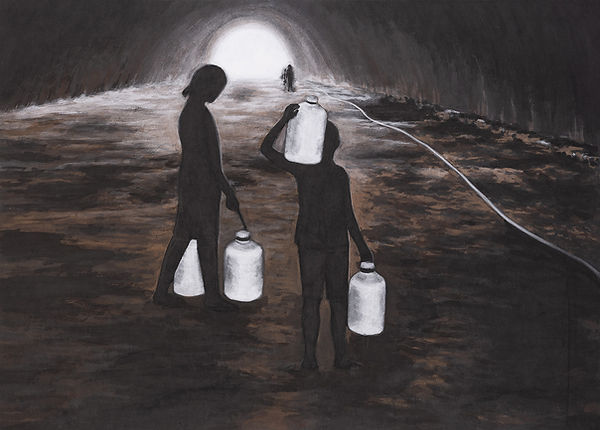
터널, 65x91cm, 장지에 채색, 2024
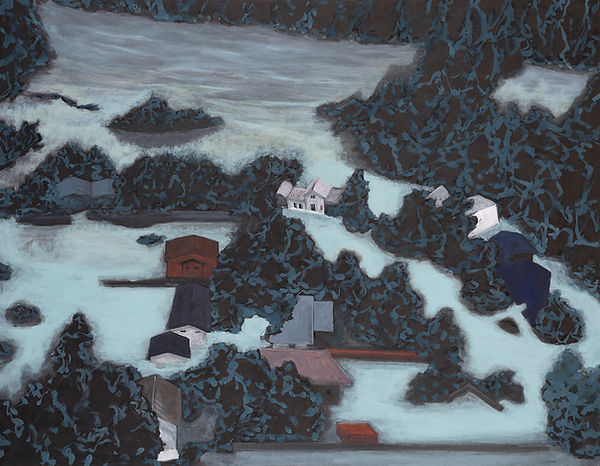
알래스카의 푸른 물, 91x117cm, 장지에 채색, 2024

나의 이웃들, 65x80cm, 장지에 채색, 2024
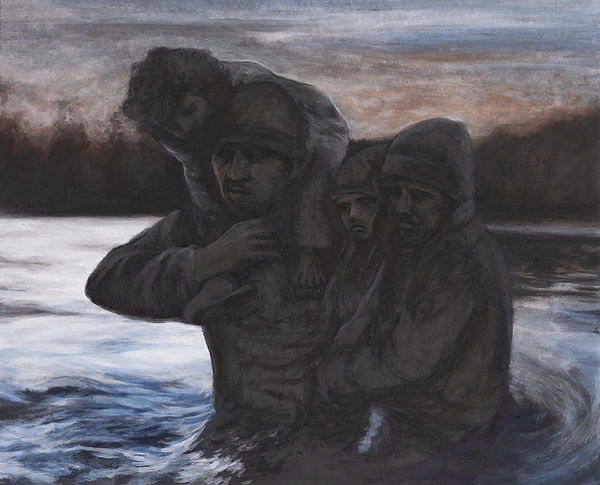
가족, 65x80cm, 장지에 채색, 2024

소녀, 84x59cm, 장지에 채색, 2024

당신은 충분히 경고를 받았습니다, 145x112cm, 장지에 채색, 2024

응시, 45x38cm, 장지에 채색, 2024

집 없는 땅, 91x117cm, 장지에 채색, 2024

이름없는, 45x38cm, 장지에 채색, 2024
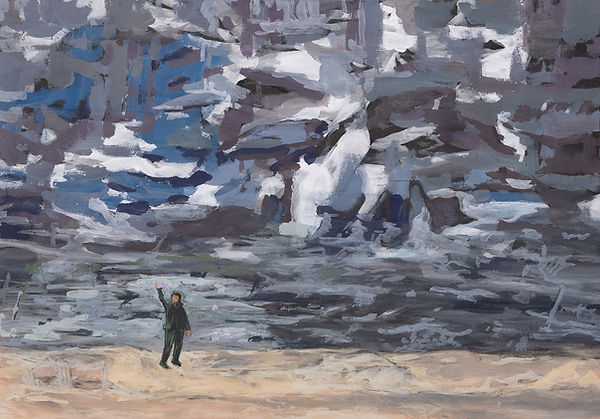
기념 사진, 45.5 x65cm, 장지에 채색, 2024
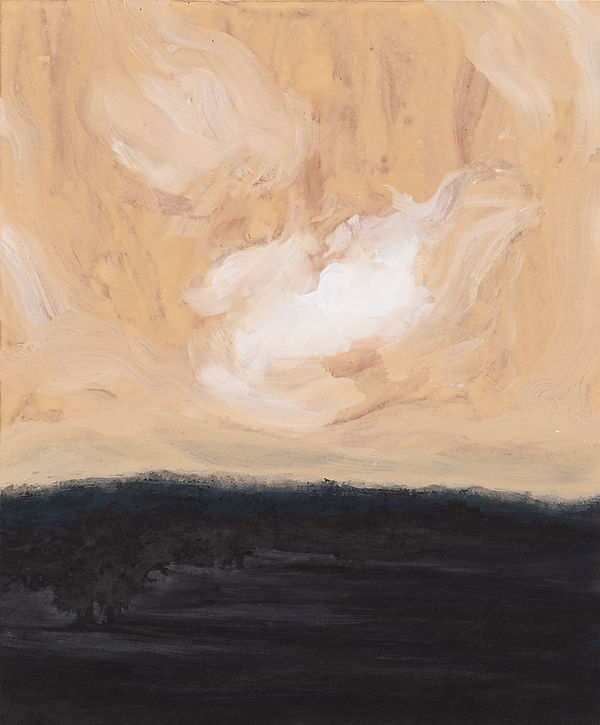
오렌지 스모그, 45x38cm, 장지에 채색, 2024

눈보라, 73x91cm, 장지에 채색, 2024


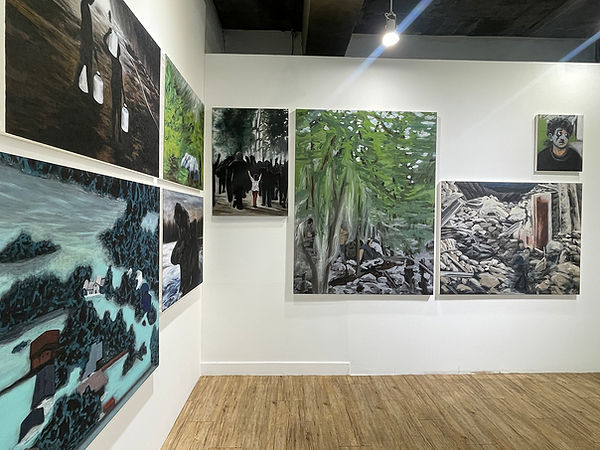

아트아카이브리드모어, 2024
검고도 흰
거친 싸리 눈 같은 회색 모래더미들 위로 육중한 쇳덩어리가 충돌한다. 눈에 보이지 않는 검은 파편들은 과거에 그랬듯 낮은 울타리를 부수고 사람들을 사라지게 한다. 우리는 길 없는 동굴속으로 직진하고 있지만 누구에게도 경고의 말은 들리지 않는다.
길 없는 동굴속으로
쓰이지 않을지도 모르는 사물을 모으는 오래된 습관이 있다. 버릴 수도 없는 과거처럼 내 살갗에 붙어 있다. 수집된 사물 중에는 내가 갈 수 없는 장소의 사진들도 포함된다. 십 오 년 전 죽은 어린 아들의 무덤 앞에서 울고 있는 어머니의 사진을 시작으로, 수집하는 습관은 이젠 점점 의무감 속에 진행되는 것처럼 느껴진다. 그 사진을 처음 본 순간 죄책감이라는 것이 생겼다. 그로부터 십년이 지나 그 사진을 토대로 울음을 참아내며 작업을 해야 했던 고통이, 알 수 없는 어떤 의무감이 나를 살게 한 것인지도 모른다. 내가 그것들을 통해 본 세상은 다른 이들의 삶이 아니라 나의 삶처럼 여겨지기 시작했다.
나를 기억하고 기록하는 것은 다른 이의 몫이다. 그러나 다른 이들의 삶을 드러내고 기억하는 것은 나의 몫이다. 그 확실한 명분은 나를 흔들리지 않게 한다. 이후로 수집된 사진들은 매번 같은 사진처럼 오버랩 되는 장면들로 계속 반복되었다. 그럼에도 불구하고 게으른 나의 의식은 지난 전시의 제목처럼 무심한 관람자였고, 나약한 몸짓과 침묵에서 벗어나지 못했다. 내면의 불안이 몸 전체를 누르고 있는 것 같은 무거운 의무가 나를 도망치게 만들었고, 그로 인해 어두운 풍경들은 더 쌓여만 갔다. 그럴 수 밖에 없는 것이 수없이 많은 기록될 풍경들은 끊임없이 생겨난다. 뿜어내고 터트려야 할 그림자들이 집요하게 나를 따라 다녔다. 아니 내가 도망치면서도 그 풍경들을 따라 다닌 것일지도 모른다. 풍경이 안고 있는 이야기의 감정들을 쏟아내야만 했다.
반복되는 풍경이 있다.
과거에서 다시 과거로 반복되는 풍경은 우리의 영혼을 바래게 만든다. 기시감이 느껴지는 현장의 이야기를 마주할 때마다 아래로 아래로 가라앉은 직전의 일들이 떠오른다. 다른 기억으로 덮여진 일들은 차곡차곡 쌓여 오랜 시간 빛이 차단되고 색도 사라져 사람들의 마음속에서 제외된다. 인류의 반복된 욕망에 관한 오류는 사람들을 캄캄한 동굴로 안내한다. 소수의 견고한 이기심이 만들어낸 신념은 물에 뜬 검은 기름 같다. 그곳에는 길이 없다.
깊고 막다른 구석 어딘 가에는 이름이 아닌 숫자로 불려지는 사람이 있다. 그들은 매일 몸에 자신을 증명할 이름을 써 놓는다. 그리곤 매일을 마지막날처럼 살아간다. 열 다섯해를 살면서 다섯번의 전쟁을 겪고도 살아남은 소년은 다른 이들처럼 ‘이름없는 무덤’에 가지 않았다. 어쩌면 그는 자신을 행운아라고 부를지도 모른다. 하지만 또 다른 곳에선 죽은 엄마의 몸에서 태어난 아이가 이름조차 갖질 못하고 언제 전기가 끊길지도 모르는 병원에 누워 가느다란 호스에 몸을 맡기고 있고, 까닭모를 사건으로 한 순간 마을 전체 사람들의 숨이 멎기도 한다. 무너진 것들의 더미 속에서 죽은 이들의 곁에 있는 사람들의 얼굴은 차마 떠올릴 수도 그릴 수도 없다. 내가 그리지 못한 얼굴은 그의 얼굴도, 그녀의 얼굴도, 또 다른 누구의 얼굴도 아닌 나와 우리의 얼굴이다. 아이의 부서진 몸을 부둥켜 안고 있는 아버지의 녹아 내린 마음과, 죽은 새끼 고래를 머리에 이고 유영하는 고래의 모습은 검은 바다 그 자체다. 무엇도 담을 수 없이 모든 걸 쏟아낼 수 밖에 없는 부서진 그릇 같은 장면들은 슬프게도 반복된다.
항상 마주하던 이의 부재도, 갑자기 닥친 터전의 부서짐 같은 커다란 슬픔도 반복되면 일상이라 말할 수 밖에 없는 사소한 일이 되어 버린다. 보고도 믿기지 않을, 숨쉬기도 힘든 장면들이 사소하다니! 공포스런 익숙함이 우리를 무디게 만든다. 너무 큰 슬픔은 망각이라는 현상으로 소멸시킬 수 밖에 없기 때문이다. 사소한 일이 되어버린 것들은 우리에게 아주 오래전부터 경고를 하고 있다. 경고는 행위에 대해 조심하거나 삼가하도록 주의를 주는 것을 말한다. 또 규칙이나 규범을 어겼을 때 주는 벌칙을 뜻하기도 한다. 누군가 인간이 자신을 다른 피조물보다 우위에 두는 사고방식은 상상력의 결핍에서 비롯된, 정신의 한계가 빚어낸 미신적인 것이라고 했다. 이토록 나약한 우리는 어리석게도 세상을 계단식으로 바라본다. 모든 사람은 넓은 바다의 셀 수 없는 모래알처럼 비슷한 크기로 존재하는데도 말이다. 누가 어떤 자격으로 경고를 하고 누가 경고를 받을 수 밖에 없는 것인지 알 수 없다. 그러나 분명 그 경고로 인해 사라지는 것들이 생겨나고 주변의 사물들도 식어간다.
빛이 없는 동굴은 색을 담아내지 못한 흑백영화의 세트장처럼 보인다. 어둠속에서 우리가 볼 수 있는 것은 무엇일까? 입구부터 서서히 줄어드는 빛은 결국 고요와 약간의 미세한 소음만 허락한다. 낮은 목소리의 메아리도 허락한다. 하지만 시간이 지날수록 커지는 울음의 울림은 누구도 막지 못한다. 우리는 모두 어두운 동굴안에서 길을 잃었다. 조용히 사라져 간 것들에 관해 생각한다. 그리고 마모되어 가는 숨을 힘들게 쉬어 본다.
회색 모래더미도 검은 돌조각의 파편도 서럽듯 찬 눈의 물기가 스미기 시작하면 서서히 진해진다. 그리고 이내 하얗게 변하기 시작한다. 숨결 같은 바람에도 흩어지는 가벼운 눈이지만 내려 앉는 무게는 세상에서 가장 무겁다. 세상으로 오는 눈의 숫자는 헤아릴 수 없이 많다. 그래서 무겁다. 그 무거움은 하늘을 창백한 푸른 회색으로 만든다. 그리고 창백한 하늘에서는 커다란 눈이 오래도록 내린다. 3월이 지나도 푸른 싹 위로 눈이 내린다.
그렇게 세상은 평평해 진다.
전은희
Black Yet White
A massive hunk of iron collides against heaps of gray sand like coarse sleet. Invisible black fragments, as in the past, break low fences and make people disappear. We are heading straight into a pathless cave, yet no words of warning reach anyone.
Into a cave with no path.
I have an old habit of gathering things that may never be used. Like a past I cannot discard, it clings to my skin. Among the collected things are photographs of places I cannot go. Beginning with a photograph of a mother weeping before the grave of her young son who died fifteen years ago, the habit of collecting now feels as if it proceeds under a growing sense of duty. The moment I first saw that photograph, something called guilt was born. Ten years later, the pain of having to work from that image while holding back my tears—perhaps it was some unknowable sense of duty that kept me alive. The world I saw through those things began to feel not like the lives of others, but like my own life.
It is up to others to remember and record me. But to reveal and remember the lives of others is my task. That clear justification keeps me steady. Since then, the photographs I have gathered have kept repeating—scenes overlapping as if they were the same image each time. Even so, my lazy consciousness was an indifferent spectator, like the title of my last exhibition, and I could not escape feeble gestures and silence. A heavy obligation, as if an inner anxiety were pressing down on my whole body, made me run, and the dark landscapes only piled higher. It could not be otherwise; countless landscapes that demand to be recorded ceaselessly appear. Shadows that had to be expelled and burst followed me with persistence. Or perhaps, even as I fled, I was the one following those landscapes. I had to pour out the feelings of the stories those landscapes carry.
There is a landscape that repeats.
Landscapes repeating from past back to past make our souls fade. Each time I face the stories of a site tinged with déjà vu, the things that had sunk down and down just before rise to mind. Events smothered by other memories stack up; over long years their light is cut off and their colors drain away, and they are excluded from people’s hearts. The error of humanity’s repeated desires leads people into a pitch-black cave. The creed forged by the hardened selfishness of a few is like black oil floating on water. There is no path there.
Somewhere in a deep, dead-end corner is a person called not by a name but by a number. Each day they write on their body the name that will prove who they are. And they live each day as if it were the last. A boy who, in fifteen years of life, endured five wars and survived did not go to an “unmarked grave” like the others. He might even call himself lucky. But elsewhere, a child born from the body of a dead mother has no name at all and lies in a hospital that may lose power at any moment, his body entrusted to a thin tube, and in a single instant, by some unfathomable incident, the breath of an entire village can be cut off. Amid piles of what has collapsed, I cannot bear to recall or draw the faces of those who remain beside the dead. The face I cannot draw is not his, not hers, not anyone else’s—it is mine and ours. A father’s melted heart as he clutches his child’s shattered body, and the sight of a whale swimming with its dead calf balanced on its head, are the black sea itself. Scenes like broken bowls that can contain nothing and thus can only spill everything repeat, sadly.
The absence of the one we always faced, the great sorrow like the shattering of a home that strikes without warning—when repeated, even these become petty things we can only call everyday. Scenes unbelievable even when seen, suffocating to behold—how can they be trivial! A terrifying familiarity dulls us. For grief too great can only be extinguished by the phenomenon called forgetting. Those things that have become trivial have long been warning us. A warning means to advise caution or restraint about an act; it can also mean a penalty given when rules or norms are broken. Someone once said that the way humans place themselves above other creatures is a superstition born of a poverty of imagination, a limit of the mind. So frail, we foolishly look at the world as terraced steps—even though every person exists, like the countless grains of sand of a vast sea, in nearly the same size. We cannot know who has the standing to warn and who can only be warned. Yet clearly, because of that warning, there are things that vanish, and the objects around us grow cold.
A cave without light looks like the set of a black-and-white film that cannot hold color. What can we see in the dark? The light that dwindles from the entrance at length permits only stillness and a faint noise. It even permits the echo of a low voice. But as time passes, the swelling resonance of weeping is something no one can stop. We are all lost inside a dark cave. We think of things that have quietly disappeared. And we struggle to take a breath worn down by abrasion.
When a sorrowfully cold wetness of snow begins to seep in, the gray mounds of sand and the shards of black stone slowly deepen. And soon they begin to turn white. Though snow is light enough to scatter in a breeze like a breath, the weight with which it settles is the heaviest in the world. The number of snowflakes coming into the world is beyond counting. That is why it is heavy. That heaviness turns the sky a pallid blue-gray. And from that pale sky, large snow falls for a long time. Even after March has passed, snow falls upon the green shoots.
Thus the world grows level.