
집으로 가는 길 143x203cm 장지에 채색 2022

낮과 밤 143x203cm 장지에 채색 2022

Mound 203x286cm 장지에 채색 2022

야경 203x286cm 장지에 채색 2022

이름없는 91x72.7cm장지에 채색 2022

아이 1 45x45cm장지에 채색 2022

아이 2 45x45cm장지에 채색 2022

슬로바니아로 가는 기차 80x117cm장지에 채색 2022

정릉 91x72.7cm장지에 채색 2022
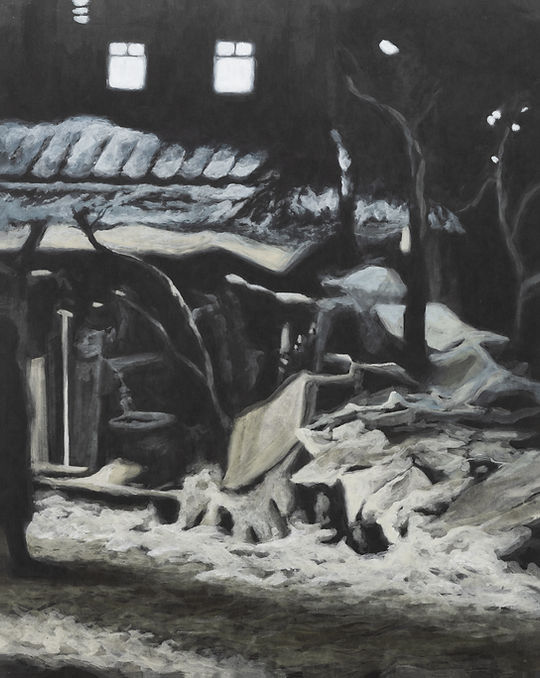
겨울 밤 91x72.7cm장지에 채색 2022

밤 91x72.7cm장지에 채색 2022

버스정류장 91x72.7cm장지에 채색 2022

Fade-out 41x53cm 장지에 채색 2022

우리가 사라지는 방식1 117x80cm 장지에 채색 2022
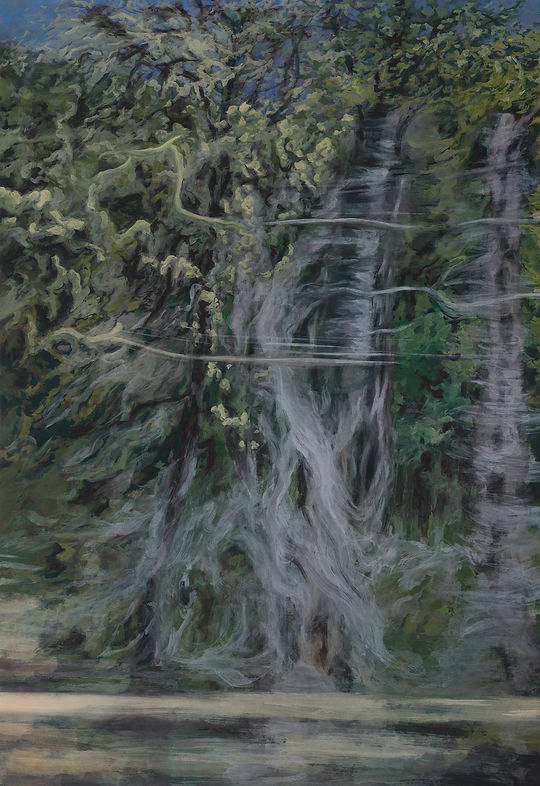
우리가 사라지는 방식2 117x80cm 장지에 채색 2022

우리가 사라지는 방식3 117x80cm 장지에 채색 2022

우리가 사라지는 방식4 117x80cm 장지에 채색 2022

우리가 사라지는 방식5 117x80cm 장지에 채색 2022

숲길1 91x72.7cm 장지에 채색 2022

숲길2 91x72.7cm 장지에 채색 2022

바람1 91x72.7cm장지에 채색 2022

바람2 91x72.7cm장지에 채색 2022

검은 날 91x73cm 장지에 채색 2022


언주라운드, 2022
우리가 사라지는 방식
어릴 적 몇 달에 한 번 가던 집으로 가는 버스 안에서 바라보던 풍경을 지금도 변함없이 볼 수 있는 현실이 감사한 것임에 대해 생각해 본 적이 없었다. 너무도 일상적인 일들이라 당연하다는 생각에 그렇겠지만, 지난 몇 년간 우리는 그런 당연함이 이제는 당연한 것이 아닌 시간을 보내고 있다. 최근에는 이런 주변의 일상적인 풍경 중에서 나의 시각에 잡히지 않는, 눈으로 볼 수 없는 풍경의 어떤 부분 –늦은 눈의 움직임이 포착하지 못하는 장면들–을 사물의 눈을 빌려 포착하고 그 풍경의 형태를 그리고 있다. 우리가 잡을 수 없는 시간이 만들어낸 변형된 형상이 화면 위에서 시간을 흐르게 만든다. 그리고 그 풍경 안에서 사람이 살아있다는 것 자체가 좋은 것 같다는 영화 ‘천국의 나날들’의 대사처럼 우리가 살아있음에, 숨 쉬고, 생각하고, 피부로 시간을 감각하고 있음을 온전히 느끼고 있는지 생각해 보게 된다.
이미 지척으로 가까워진 세계는 보이지 않는 관계망으로 이어져, 불특정한 사건과 재난의 원인이 자신이 아니라고 말할 수 있는 사람은 없다. 가끔은 비현실적인 사건과 재난의 장면들이 사건과 사건을 연쇄하여 공존하게 만들고, 사건들 사이에 인과적인 접속을 통해 현실적 의미를 만드는 허구로 된 상상력의 산물이기를 바라기도 한다. 영화가 갖는 영상의 시간성처럼 지금 보고 있는 장면이 한 번의 눈 깜빡임으로 장면이 전환되어 다시 눈을 뜨면 잠시 꿈을 꾼 것처럼 온전한 세계로 돌아와 있었으면 한다. 그렇지만 현실은 상황이나 사건, 사물에 대해 이해를 가능하게 하는 허구적 양식과 같지 않다. 잠깐의 눈 깜빡임으로 장면이 전환되지도, 상상하고 바라는 대로 다시 온전해지지도 않는다.
이반 일리치가 가치 있는 삶의 태도로의 가난에 대한 해석에 등장하는 ‘덧없는 사물’에 대한 거리 두기가 오늘의 사회에서는 의미가 전도되고 산산이 부서져 버렸다. 이제 사람들은 대부분 시간을 ‘덧없는 사물’을 위해 할애하게 되었고, 이 누적의 결과는 기후위기와 감당하기 힘든 질병으로 우리의 삶을 고통스럽게 만들고 있다. 나는 지난 몇 년간의 전시를 통해 이러한 현장의 직접적인 상황을 재현하고 구성한 작업을 통해 우리의 불안하고 대중적인 침묵에 관해 이야기했다. 감당하기 힘든 현실의 난제들이 보도되는 방송 매체와 지면 보도 자료를 통해 모아진 기초 자료들은 항상 날짜를 표기하고 수집해 두었다. 그러나 어느 순간부터 시간을 기록하기 위해 표기된 날짜는 숫자에 불과한 무의미한 것이 되었다.
지금 순간에도 끊임없는 분쟁과 사건들은 더 빈번해지고 우리의 욕망과 안이한 사고방식이 빚어낸 자연재해는 돌이킬 수 없게 모든 것을 사라지게 만들기 때문에 언제 무슨 사건이 일어났는지에 대한 기록은 불필요한 것이 되고 말았다. 이렇게 예측 불가능한 속도로 찾아오는 변화에 우리가 간과하고 있는 것은 망각이 불러올 고통과 상실의 시간이다. 우리 주변을 둘러싸고 있는 숨어있는 사건들은 이름 없는 숲을 떠도는 사람들의 삶을 조금씩 희미하게 만들어 간다. 그리고 결국은 의식에 남아 있지 않은 풍경으로 삶은 축소되고 소멸한다. 점점 밝은 빛으로 바뀌는지, 검고 어두운 화면으로 끝나는지 명암의 처리 여부에 따라 느껴지는 여운이 달라지는 fade-out의 결과처럼 말이다.
이번 전시에서는 그러한 인물들의 사건과 상황이 일상적 풍경 속에 녹아 있거나 숨어있다. 풍경과 사물, 사람이라는 요소를 각각의 위치와 배치방법과 크기, 그려진 효과 등으로 작품 안에 존재하는 서사, 즉 평면 회화 안에서 시간, 장소, 감정 등 서사적인 실제가 녹아 있는 시각화 된 메시지를 보여 주고자 한다. 우리가 스스로 침묵하는 사이에 누군가는 세상에서 가장 소중한 것을 상실할지도 모르는 그 침묵의 한순간을 그려낸다. 말할 수 없는 언어들로 가득 차서 생기는 침묵의 무게는 비교 불가의 무거움이 침묵을 저 깊은 땅밑까지 가지고 간다.
음 소거된 풍경 속 그 무거운 침묵에 검어 진 얼굴들이 돌아다닌다. 그리고 진실을 회피하는 고민 없는 무언의 폭력은 주변을 사라지게 만든다. 우리의 살갗 같던 안식처가, 같이 숨 쉬던 사람들과 그 흔적이 남아 있는 풍경이 하얀 덩어리가 되어 사라지고 빈 공터만 남은 풍경 안에서 우리는 어떤 이야기를 더 할 수 있을 것이며, 어떤 의미로의 시간을 기억할 수 있을까?
We Fade Away
I had never really thought about being grateful for the fact that I can still see, unchanged, the scenery I used to watch from the bus to a house I visited every few months as a child. Perhaps because such things are so ordinary, I simply took them for granted—but over the past few years we have been living through a time in which those assumptions are no longer a given. Lately, among these everyday surroundings, I have been borrowing the “eyes of objects” to capture the parts of a landscape that escape my own sight—elements the slow movement of a late snowfall fails to register—and tracing the forms of those scenes. The altered figures shaped by time we cannot grasp set time flowing across the surface. And, like the line from the film Days of Heaven—that the very fact of being alive is something good—I find myself wondering whether we truly feel, fully, that we are alive within those landscapes: breathing, thinking, and sensing time on our skin.
A world that has already drawn close is bound together by invisible networks; there is no one who can say they are not implicated in the causes of indeterminate events and disasters. At times, I wish the unreal scenes of incidents and calamities—coexisting in chains—were the product of a fictive imagination that forges meaning through causal links between events. As with cinema’s temporal nature, I wish the scene before me would cut away with a blink, and that, opening my eyes again, I would return to an intact world as if from a brief dream. But reality is not like the fictional forms that allow us to make sense of situations, events, and things. With a brief blink, the scene does not change, nor does it become whole again in accordance with what we imagine or desire.
The “ephemeral things” that appear in Ivan Illich’s interpretation of poverty as an attitude toward a valuable life—keeping a distance from them—have had their meaning inverted and shattered in today’s society. Now most people devote their time to those “ephemeral things,” and the accumulated result—climate crisis and unmanageable illness—makes our lives painful. Through exhibitions over the past few years, by reconstructing and staging the immediate realities of such sites, I have tried to speak about our anxiety and the silence shared by the crowd. The source materials I gathered from broadcast news and print reports on the intractable problems of our reality were always dated and filed. Yet at some point, the dates recorded to mark time became meaningless—mere numbers.
Even at this very moment, ceaseless conflicts and incidents grow more frequent, and the natural disasters produced by our desires and complacent ways of thinking erase everything irreversibly. Records of when and what took place have, in the end, become unnecessary. Amid changes arriving at an unpredictable speed, what we overlook is the time of pain and loss that forgetting will summon. The hidden events surrounding us slowly fade the lives of those who wander nameless forests. In the end, life is reduced and extinguished into a landscape that leaves no trace on consciousness. Like the outcome of a fade-out, where the lingering aftertaste differs depending on whether the light grows brighter or the screen sinks to black.
In this exhibition, the incidents and situations of such figures are dissolved into, or concealed within, everyday scenes. Through the elements of landscape, object, and person—their respective positions, methods of placement, scale, and rendered effects—I aim to present the narrative that exists within the work: a visualized message in which the realities of narrative—time, place, emotion—are infused into the surface of painting. I depict that one instant of silence in which, while we ourselves remain quiet, someone may be losing the most precious thing in the world. The weight of silence, formed by a surfeit of unspeakable languages, carries that silence down into the deepest underland with an incomparable heaviness.
Within the muted landscape, faces darkened by that heavy silence move about. And an unthinking, wordless violence that evades truth makes what is around it disappear. When the refuge that once felt like our own skin—the landscapes where those who breathed with us and their traces remained—turns into a white mass and vanishes, leaving only an empty lot, what more can we say within that scene, and what kind of time, with what meaning, will we be able to remember?