
Emptynest, 한지에 채색, 182x227cm, 2015

터널 1, 한지에 채색, 91x73cm, 2016

터널 2, 한지에 채색, 91x73cm, 2016

Emptiness-창문3, 한지에 채색, 75x152cm, 2015

비상벨, 한지에 채색, 65x50cm, 2016

비상구, 한지에 채색, 53x45cm, 2016

Emptiness-의자, 한지에 채색, 200x120cm, 2015

검은빛, 한지에 채색, 53x45cm, 2016
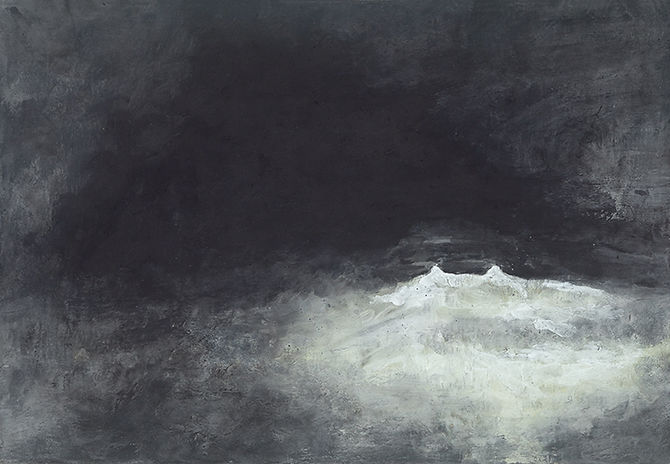
검은안개, 한지에 채색, 24x34cm, 2016

빈방, 한지에 채색, 122x163cm, 2016


철암탄광역사촌, 2016
검은불빛
기억을 가둔 장소의 재탄생
장소는 우리가 세계를 직접적으로 경험하는 의미 있는 중심점이며, 인간과 자연의 질서가 적절히 융합되어진 생활세계로 사람들의 삶의 의미와 실제 사용되는 사물, 그리고 인간들의 활동으로 가득 찬 공간이다. 또한 개인과 집단 간의 정체성의 중요한 원천이며, 때로는 사람들로 하여금 정서적·심리적으로 깊은 유대의 감정을 느끼게 하는 실존의 중심이 되기도 한다.
사람의 기억은 실존을 바탕으로 하며, 그 실존의 물리적 배경이 되는 것이 장소인 것이다. 따라서 사람과 장소의 불가분의 관계는 인간의 존재하고자하는 본질적 속성에 기인하는 것으로, 이러한 관계는 사람들이 특정한 장소에 거주하면서부터 시작된다. 여기에 사람들이 존재하고자하는 목적에 시간이 더해지면 장소에 속한 집이라는 공간은 기억과 애착이 공존하는 세계로 변모하게 되고, 애착과 같은 감정의 축적은, 삶을 영위하는 현실의 장소를 살아있는 존재로 만들어준다.
‘토포필리아(Topophilia)'를 통해 이-푸 투안이 말하고자 했던 장소의 경험으로 생겨난 장소에 대한 애정은 사람들이 삶의 터전에 갖게 되는 정(情)과 사랑(愛)을 말하고자 한 것으로, 장소나 거주공간으로의 집이 갖는 존재성의 근간이 되는 것이다. 이렇듯 장소는 사람들의 삶의 의미 형성에 가장 근원적인 출발점이며, 서로의 삶을 공유하는 물리적인 공간인 것이다. 이는 단순하게 존재하는 사물들이 놓여 진 자리만을 가리키는 것이 아니라, 그 속에 녹아있는 의미 있는 현상들이 어우러져 위치하는 모든 것을 말하는 것이며, 이러한 가시적인 것, 비가시적인 모든 것들은 장소를 각각 다른 모습으로 과거로부터 현재를 지나 미래에도 존재하게 한다.
장소는 그 위치나 외관의 모습으로만 간단하게 설명될 수 있는 것이 아니며 주변 환경, 의식, 일상적인 사건, 타인들의 생활, 개인적인 체험 등이 뒤섞여 그 장소만의 독특한 성격을 가지게 된다. 다양하고 다원적인 장소의 경험은 장소를 명확하게 인식하게 만들어주며, 장소를 의미 있는 실체로 규정하게 된다.
이러한 장소를 기억하게 되는 것은 과거를 담고 있는 구체적인 장소를 기억함으로써 장소의 의미를 되짚어 볼 수 있게 되는 것이다. 그러나 현대 사회에서 자연스러운 기억과 추억이 연결될 수 있는 도시의 흔적은 점점 사라지고 있으며, 이 사라짐의 과정이 인위적, 강제적으로 이루어지고 있는 현실은 언제나 사회적 문제로 떠오르고 있는 실정이다. 현재의 태백이라는 도시 역시 비슷한 과정 속에 있으며, 태백이라는 장소로서의 장소성 역시 과거에 만들어졌던 산업과 관련된 기억과 같지 않다. 모든 것은 시작과 끝의 양면을 가지고 있는 것처럼, 시대의 변화가 가져다준 태백의 변화는 흔적을 통해 과거를 들추게 할 뿐이다.
장소에 남은 흔적들 속에서 우리는 장소와 사물에 대한 기억을 소유함으로서 회상의 주체가 될 수 있다. 그러므로 지금도 어디선가 빈번히 진행되고 있는 일상적 흔적을 지닌 장소의 강제적 소멸은, 물리적인 장소의 소멸은 가져올 수는 있으나 사람들의 기억을 소멸하지는 못한다. 따라서 탄광, 광부, 갱도, 검은 땅 등으로 기억되는 태백의 모습은 사회의 변화로 인해 과거와 똑같은 활기를 다시 재현하지는 못하지만 다른 모습의 장소를 경험하게 하는 용도로 변화하고 있다.
과거 찬란했던(어떤 면에선 너무도 힘들었던) 삶을 그대로 간직한 빈 장소를 또 다른 빈 장소의 풍경으로 가득 채웠다. 현재의 빈 거주지에 다른 형태의 빈 거주지의 풍경과 기능을 상실한 사물들, 혹은 또 다른 곳에 버려진 사물들을 소재로 한 작품들을 배치하여 상실된 장소의 존재성을 부각시키고자 하였다.
빈 둥지라고 명명된 이번 전시는 비었으나 비어있지 않은 장소의 구현을 통해 존재를 표현하고자 한다. 추상성을 띤 장소가 아닌 실제 존재하던 집안의 사물이나 방의 한 구석, 또는 대문이나 마당과 같은 집의 외부 구성요소들까지도 사람과 장소를 연결하는 고리로 작용하며, 이러한 요소들은 평범한 장소를 구체성을 띤 친밀한 곳으로 변하게 하고 특별하고도 유일한 존재성을 가지게 한다.
2015.12.
Black Light
The Rebirth of Places that Enclose Memory
A place is the meaningful center through which we directly experience the world—a lived realm where the orders of humans and nature are aptly interwoven, a space filled with the meanings of people’s lives, with the things actually used, and with human activity. It is also a vital source of identity for individuals and groups, and at times becomes an existential center that allows people to feel deep emotional and psychological bonds.
Human memory is grounded in existence, and the physical backdrop of that existence is place. Thus the indivisible relationship between person and place stems from the essential human impulse to exist, and begins the moment people dwell in a particular locale. When time is added to the purpose of one’s being-in-the-world, the house—as a space belonging to place—transforms into a world where memory and attachment coexist. The accumulation of feelings such as attachment, in turn, animates the real, lived place into a living presence.
Through topophilia, Yi-Fu Tuan sought to speak of the affection for place that arises from the experience of place itself—of the jeong (affection) and love people come to feel for the grounds of their lives. This is the basis of the house’s very being as a place of dwelling. In this way, place is the most fundamental starting point for the formation of life’s meanings, a physical space where our lives are shared. It does not merely indicate where simple objects happen to sit; it encompasses everything situated there, interlaced with meaningful phenomena steeped within it. The visible and the invisible together allow place to exist—each in its own form—from the past, through the present, into the future.
A place cannot be explained simply by its location or outward appearance; its unique character emerges from a mingling of surroundings, consciousness, everyday events, the lives of others, and personal experience. Varied, plural experiences of place make our perception of it precise, leading us to define place as a meaningful entity.
To remember such places is to recall concrete sites that hold the past, allowing us to retrace their meanings. Yet in modern society, the traces of cities where natural memory and recollection might connect are steadily disappearing—and because this disappearance is often engineered and forced, it continually becomes a social issue. The city of Taebaek today is passing through a similar process; its sense of place is no longer identical to the industrial memories once formed there. As with all things that have both a beginning and an end, the changes brought by the times in Taebaek summon the past only through lingering traces.
Amid the traces left behind, we can become subjects of recollection by possessing memories of places and things. Thus the forced erasure—still happening everywhere—of places bearing everyday traces may bring about the disappearance of physical sites, but it cannot annihilate people’s memories. Accordingly, Taebaek—remembered in images of coal mines, miners, tunnels, and black earth—cannot revive the very same vigor of its past, but is shifting toward enabling experiences of place in other forms.
I have filled an empty site—one that still keeps the brilliance (and, in some respects, the hardships) of a former life—with the landscape of yet another empty site. By arranging works that take as their motifs the scenes of different kinds of vacant dwellings within present-day empty residences, along with objects that have lost their function or things discarded elsewhere, I sought to accentuate the existence of places that have been lost.
Titled Empty Nest, this exhibition seeks to express being through the realization of a place that is empty yet not empty. Not an abstract site but the actual things inside a once-inhabited house, a corner of a room, or even exterior components such as a gate or a yard—all serve as links connecting people and place. Such elements transform an ordinary site into a concrete, intimate locale, endowing it with a special and singular presence.
December 2015